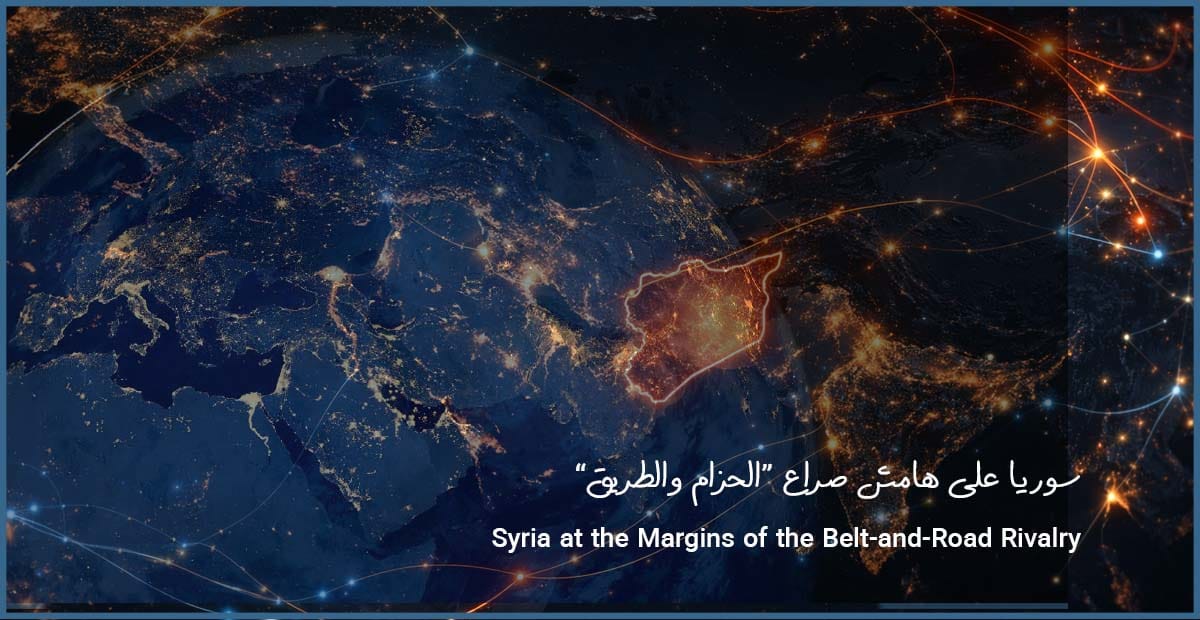
This analytical paper explores Syria’s strategic positioning within the broader context of the geopolitical and economic competition between the United States and China. It examines how the “Belt and Road Initiative” (BRI) and the evolving “IMEC” (India-Middle East-Europe Economic Corridor) influence the Syrian conflict and its potential recovery. The study delves into the shifting dynamics of regional alliances and how global powers view Syria—not just as a localized conflict, but as a critical node in international trade routes and energy corridors. By analyzing the intersection of infrastructure diplomacy and political stability, the paper provides essential insights into whether Syria will remain a fragmented “patchwork” of foreign influences or emerge as a unified actor capable of navigating a multipolar world.
Authors and Contributors:
The paper is authored by Nihad Alamiri (Partner at LUGARIT) and Zedoun Al Zoubi (Director at LUGARIT and IFI Associate Fellow). This research is a collaborative effort between LUGARIT and the Issam Fares Institute for Public Policy and International Affairs (IFI) at the American University of Beirut (AUB), aiming to provide high-quality knowledge for policy development in the Middle East