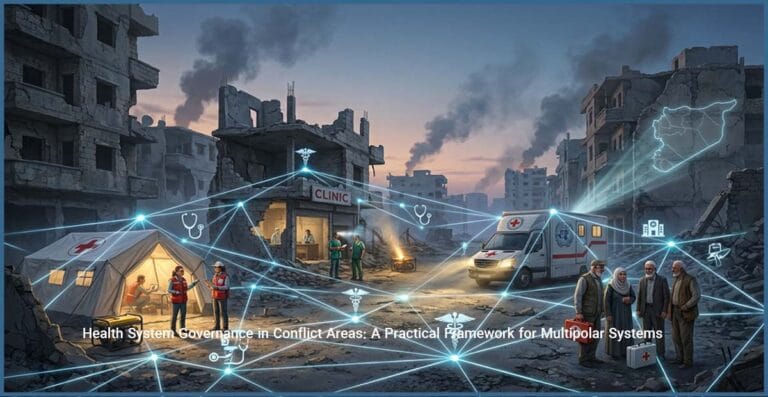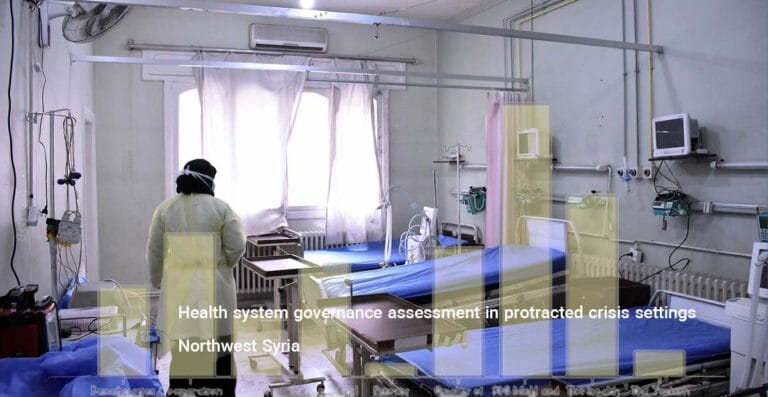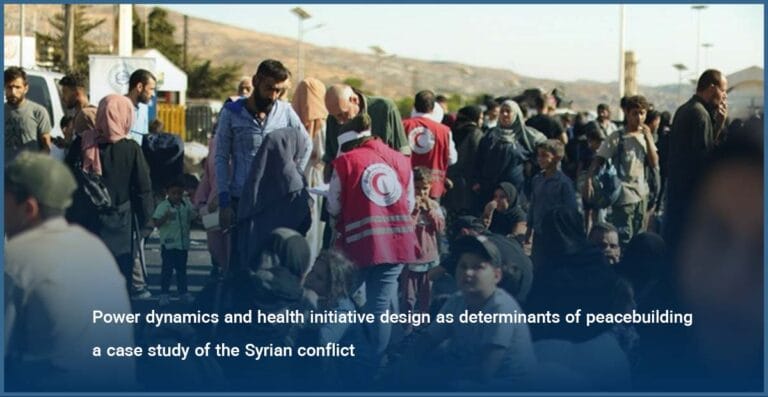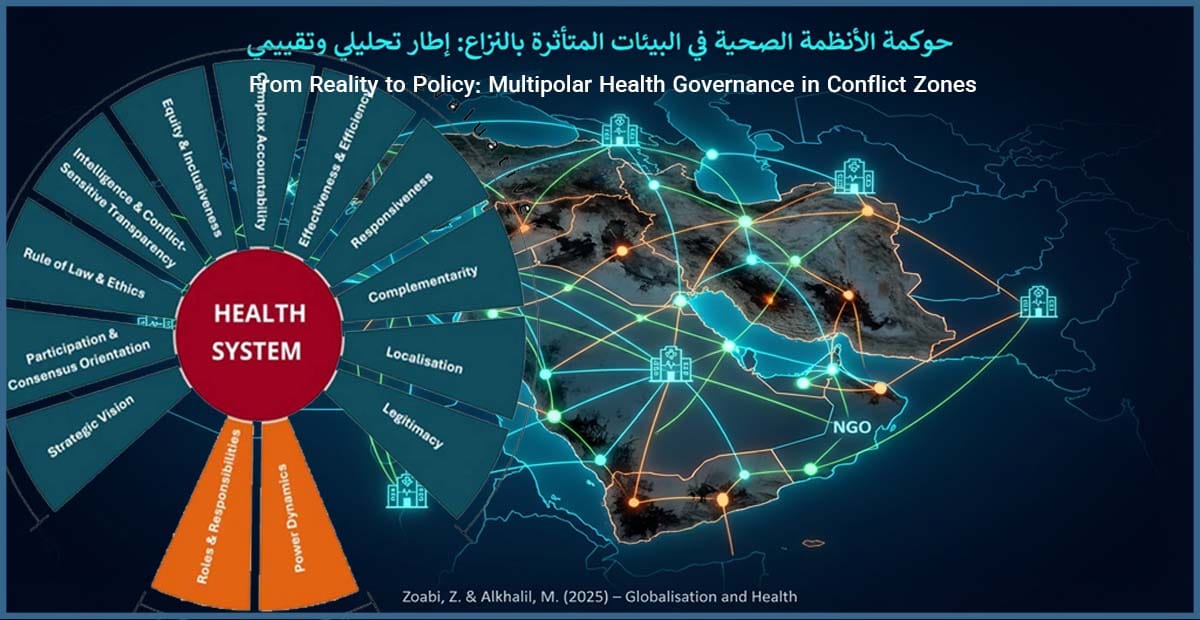
This research introduces a novel institutional framework specifically designed to assess and evaluate health system governance in conflict-affected and high-risk areas (CAHRAs). Recognizing that traditional, hierarchical governance models often fail in fragmented settings, the study develops a two-step approach—descriptive and evaluative—to capture the complexities of “multipolar” health systems. By integrating power dynamics, stakeholder roles, and eleven core principles such as legitimacy, localization, and conflict-sensitive transparency, the framework provides a practical tool for policymakers and practitioners. Drawing on extensive field experience from Northwest Syria (2011–2024), the paper offers a structured methodology to navigate the non-traditional leadership and coordination challenges inherent in fragile environments, ultimately aiming to foster more resilient and responsive health systems.
Authors and Contributors:
This study was authored by a multidisciplinary team of experts: Munzer Alkhalil and Zedoun Alzoubi (Joint First Authors), alongside Salah Safadi, Aula Abbara, Abdulkarim Ekzayez, Alvaro Alonso Garbayo, and Karl Blanchet. The work was supervised and co-authored by Paul Spiegel and Sameen Siddiqi (Joint Last Authors). The research was published in the journal Globalization and Health (2026).