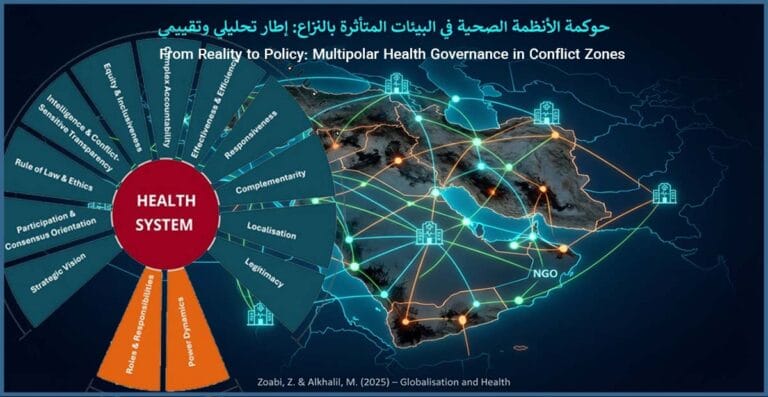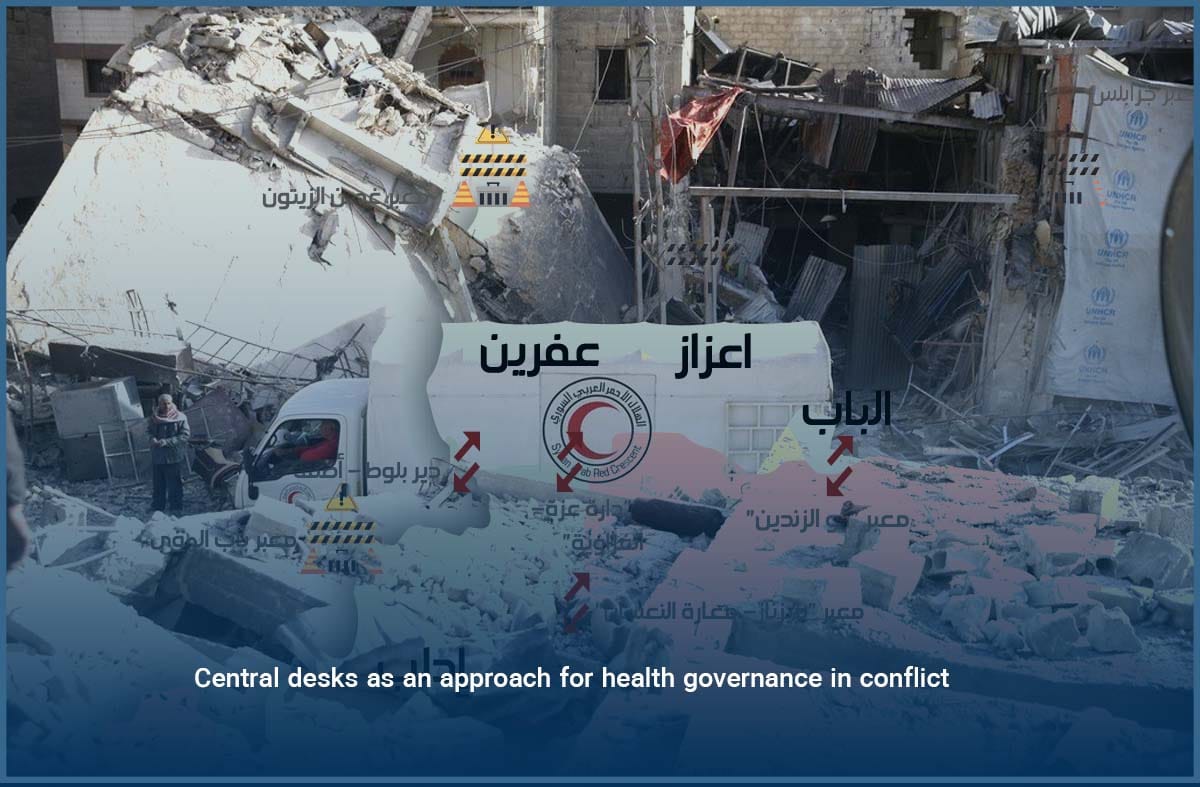
This study explores the effectiveness of “Central Desks” as a pragmatic governance model for health systems in conflict-affected areas, specifically focusing on Northwest Syria. It examines how these specialized technical bodies were established to bridge the gap between fragmented health directorates, NGOs, and international donors. The research analyzes the desks’ role in coordinating essential health services—such as the “Referral Desk” and the “Information Management Desk”—and evaluates their ability to enhance leadership, transparency, and resource allocation under extreme political and security pressures. By documenting these local innovations, the paper provides a blueprint for how technical coordination can serve as a stepping stone toward more formalized and sustainable health governance in fragile and divided settings.
Authors and Contributors:
The research was conducted by a team of experts with extensive field and academic experience: Maher Al Aref, Zedoun Al Zoubi, Munzer Al Khalil, Orwa Al Abdulla, and Abdulkarim Ekzayez. This work was supported by the Research for Health System Strengthening in Northern Syria (R4HSSS) and contributed to the knowledge base of the Syria Public Health Network and the Centre for Conflict & Health Research at King’s College London.