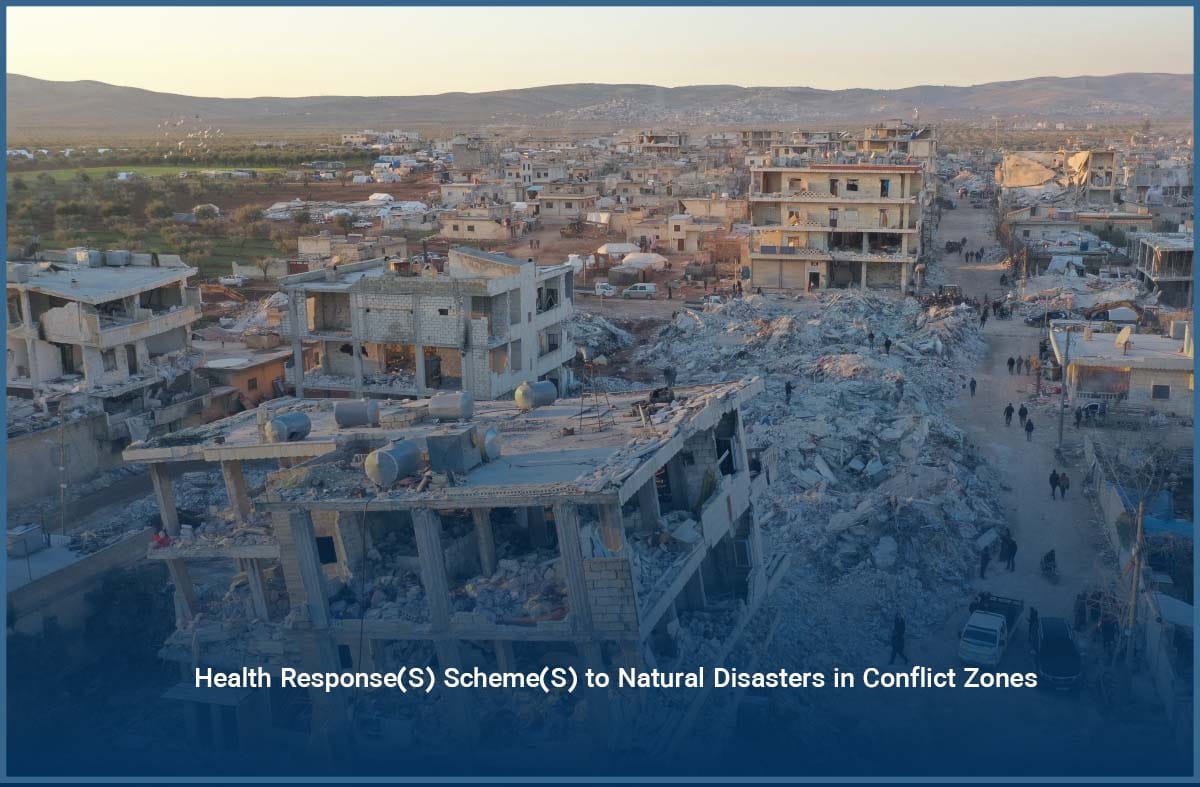
Health Response(S) Scheme(S) to Natural Disasters in Conflict Zones- a Case Study of the Urgent Health Response to the Earthquake in Northwest Syria
This research paper examines the complex challenges of providing an urgent health response to natural disasters within active conflict zones, using the devastating February 2023 earthquake in Northwest Syria as a primary case study. It analyzes the transition from “conflict-mode” healthcare to “disaster-response” mode, highlighting the institutional and logistical gaps that emerge when international aid is delayed or restricted by political boundaries. The study evaluates the performance of local health networks and the “Central Desks” in managing mass casualties, and it proposes a specialized framework for disaster preparedness tailored to fragile settings. By documenting the resilience and innovations of local actors, the paper provides critical lessons for the global humanitarian community on how to integrate disaster risk reduction into health system strengthening within high-risk, multipolar environments.
Authors and Contributors:
The study was authored by a team of leading experts: Zedoun Alzoubi and Munzer Alkhalil (Joint First Authors), along with Kristen Meagher, Abdulkarim Ekzayez, Mustafa Aledou, and Preeti Patel. This research is a product of the Research for Health System Strengthening in Syria (R4HSSS), involving collaborations between King’s College London, LUGARIT, and MedGlobal.